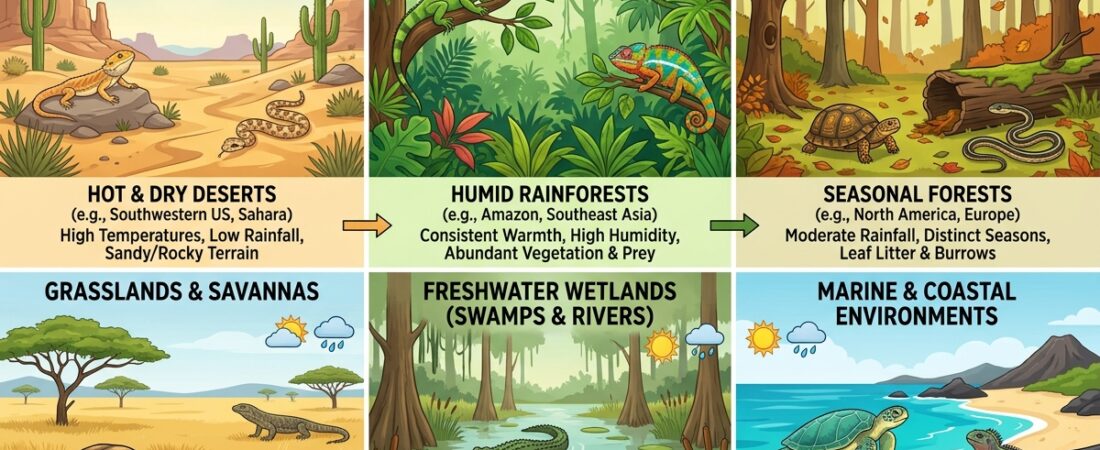
Reptiles are found in many parts of the world, from hot deserts and tropical forests to freshwater lakes, rivers, grasslands, and oceans. Their ability to adapt to different environmental conditions has allowed them to survive in a wide range of habitats. Snakes, lizards, turtles, tortoises, crocodiles, and other reptiles each have specific habitat requirements based on their body structure, diet, temperature needs, and behavior.
A reptile habitat is the natural environment where a reptile lives, finds food, reproduces, shelters from predators, and regulates its body temperature. Because reptiles are ectothermic animals, their surroundings play an especially important role in their survival. They often move between sunny and shaded areas to maintain a suitable body temperature.
What Is a Reptile Habitat?
A reptile habitat includes all the environmental conditions a reptile needs to survive. These conditions can include temperature, sunlight, water, vegetation, soil, rocks, shelter, and food sources.
Different reptiles need different habitats. For example, a desert lizard may require dry ground, rocks, and plenty of sunlight, while a freshwater turtle needs ponds, lakes, or slow-moving rivers. Sea turtles spend most of their lives in marine environments but depend on beaches for nesting.
Reptiles are therefore not limited to one particular type of environment. Their habitats are as diverse as the reptiles themselves.
1. Desert Habitats
Deserts are home to many reptiles because these animals can adapt to hot and dry conditions. Desert reptiles have developed special features that help them conserve water and survive extreme temperatures.
Examples include desert tortoises, horned lizards, geckos, and several species of snakes.
Many desert reptiles avoid the hottest part of the day by hiding under rocks, inside burrows, or beneath vegetation. They may become active during cooler mornings, evenings, or nighttime hours.
Desert habitats provide reptiles with insects, small mammals, plants, and other food sources. Rocks and underground burrows also provide important protection from predators and extreme temperatures.
2. Tropical Rainforest Habitats
Tropical rainforests provide warm temperatures, high humidity, dense vegetation, and abundant food. These conditions make them suitable for many species of reptiles.
Rainforest reptiles include tree-dwelling snakes, iguanas, chameleons, geckos, turtles, and various lizards.
Some reptiles spend most of their lives in trees, while others remain close to the forest floor. Tree-dwelling species often have adaptations that help them climb branches and move through dense vegetation.
Rainforests also provide many hiding places. Leaves, tree trunks, roots, fallen branches, and thick vegetation can protect reptiles from predators while helping them remain hidden when hunting.
3. Grassland Habitats
Grasslands contain large open areas dominated by grasses and relatively few trees. These environments support various reptiles, particularly snakes, lizards, and tortoises.
Grassland reptiles can find insects, rodents, small birds, and plants for food. Rocks, underground burrows, and patches of vegetation provide shelter.
Some snakes use grasslands to hunt small mammals, while lizards may spend time basking in sunlight and quickly retreat into vegetation when threatened.
Because grasslands can experience significant temperature changes between day and night, reptiles often move between sunny and shaded areas to regulate their body temperature.
4. Forest Habitats
Forests are another important reptile habitat. Temperate and tropical forests provide different conditions, but both can support a wide variety of reptile species.
Forests offer reptiles plenty of shelter through fallen logs, tree roots, leaf litter, rocks, and thick vegetation. These features provide places to hide, hunt, rest, and lay eggs.
Many forest reptiles are excellent climbers. Some snakes and lizards spend significant amounts of time in trees, while others live primarily on the forest floor.
The availability of food and shelter makes forests valuable habitats for reptiles.
5. Freshwater Habitats
Freshwater habitats include ponds, lakes, rivers, streams, and wetlands. These environments are especially important for aquatic and semi-aquatic reptiles.
Freshwater turtles, crocodilians, water snakes, and some lizards can be found around freshwater environments.
Water provides opportunities for swimming, hunting, cooling, and escaping predators. Many aquatic reptiles also use nearby land for basking and nesting.
For example, freshwater turtles may spend time in water searching for food but leave the water to bask in sunlight or lay eggs.
Healthy freshwater habitats require clean water, suitable vegetation, safe nesting areas, and sufficient food.
6. Wetland Habitats
Wetlands are areas where water covers or saturates the soil for part or all of the year. Swamps, marshes, and similar environments can support many reptile species.
Wetlands provide reptiles with water, vegetation, mud, shelter, and abundant prey. Crocodiles, alligators, turtles, snakes, and several lizard species can live in or around wetland environments.
These habitats are particularly valuable because they support many different types of wildlife. Reptiles may use wetland vegetation for cover and shallow water for hunting.
Protecting wetlands is therefore important not only for reptiles but also for birds, fish, amphibians, mammals, and insects.
7. Mountain Habitats
Although many people associate reptiles with warm lowland environments, some reptiles can survive in mountainous regions.
Mountain reptiles must cope with cooler temperatures, rocky terrain, strong sunlight, and changing weather conditions.
Certain lizards and snakes live at relatively high elevations. They may use rocks to absorb heat from the sun and hide in cracks when temperatures become unfavorable.
Mountain habitats can be challenging because temperatures may change rapidly. Reptiles living in these areas often have specialized behaviors that help them survive.
8. Coastal Habitats
Coastal areas provide important habitats for several reptile species. Beaches, mangroves, coastal wetlands, and rocky shorelines can support different types of reptiles.
Sea turtles are among the best-known coastal reptiles. They spend much of their lives in the ocean but return to beaches to lay eggs.
Coastal habitats also support crocodilians, marine snakes, and various lizards.
For nesting reptiles, beaches are particularly important. Sand temperature, beach condition, vegetation, and human activity can all affect successful reproduction.
9. Marine Habitats
Some reptiles have adapted to living primarily in the ocean. Marine reptiles include sea turtles and sea snakes.
Sea turtles have streamlined bodies and flipper-like limbs that help them swim efficiently. They travel through oceans in search of food and suitable habitats.
Sea snakes are also highly adapted to marine environments. They use their flattened tails and streamlined bodies to move through water.
Marine reptiles depend on healthy oceans and coastal ecosystems. Pollution, habitat degradation, fishing activity, and changes in marine environments can create serious challenges for these animals.
10. Urban and Human-Modified Habitats
Some reptiles have adapted remarkably well to environments changed by humans. Lizards, geckos, and certain snakes can sometimes be found around houses, gardens, farms, parks, and other developed areas.
Buildings can provide shelter, while gardens may provide insects and other food sources. Artificial structures such as walls, roofs, piles of materials, and drainage areas can also create hiding places.
However, urban environments can also be dangerous. Roads, pesticides, habitat destruction, domestic animals, and human persecution can threaten reptiles.
Creating wildlife-friendly gardens and reducing unnecessary pesticide use can help some reptiles survive in developed areas.
How Reptiles Adapt to Their Habitats
Reptiles have developed many adaptations that allow them to survive in different environments.
Their scales help protect their bodies and reduce water loss. Their ectothermic nature allows them to regulate body temperature by moving between sunlight and shade.
Camouflage is another important adaptation. Many reptiles have colors and patterns that help them blend into rocks, leaves, sand, bark, or soil.
Some reptiles have specialized feet for climbing, while others have streamlined bodies for swimming. Turtles have protective shells, and crocodilians have powerful jaws and strong tails that help them survive in aquatic environments.
What Do Reptiles Need in a Habitat?
A healthy reptile habitat generally needs several important resources:
- Suitable temperature
- Access to sunlight and shade
- Food and water
- Shelter and hiding places
- Safe areas for reproduction
- Appropriate vegetation
- Protection from excessive disturbance
The exact requirements depend on the species. A desert tortoise and a sea turtle, for example, have completely different habitat needs.
Threats to Reptile Habitats
Reptile habitats are increasingly affected by human activities. Deforestation, urban development, pollution, agriculture, road construction, and climate change can reduce or destroy natural habitats.
When habitats disappear, reptiles may lose access to food, shelter, nesting sites, and suitable temperatures. Some species may also become more vulnerable to predators and human activity.
Habitat conservation is therefore one of the most important ways to protect reptile populations.
How Can We Protect Reptile Habitats?
Protecting reptile habitats starts with conserving natural areas. Forests, wetlands, deserts, grasslands, rivers, beaches, and coastal environments all need responsible management.
People can also help by avoiding unnecessary wildlife disturbance, keeping natural areas clean, reducing pollution, and supporting responsible conservation programs.
Creating protected areas gives reptiles a safe environment where they can feed, reproduce, and maintain natural populations.
Conclusion
Reptiles can live in an impressive variety of environments. Their habitats range from deserts and tropical forests to grasslands, freshwater lakes, wetlands, mountains, beaches, oceans, and even urban areas.
Each reptile species has specific environmental requirements that help it survive. Understanding these requirements is essential for protecting reptiles and maintaining healthy ecosystems.
From a tiny gecko living around a garden to a sea turtle traveling across the ocean, reptiles demonstrate an extraordinary ability to adapt to their surroundings. By protecting natural habitats and reducing environmental threats, we can help ensure that these fascinating animals continue to thrive for generations to come.