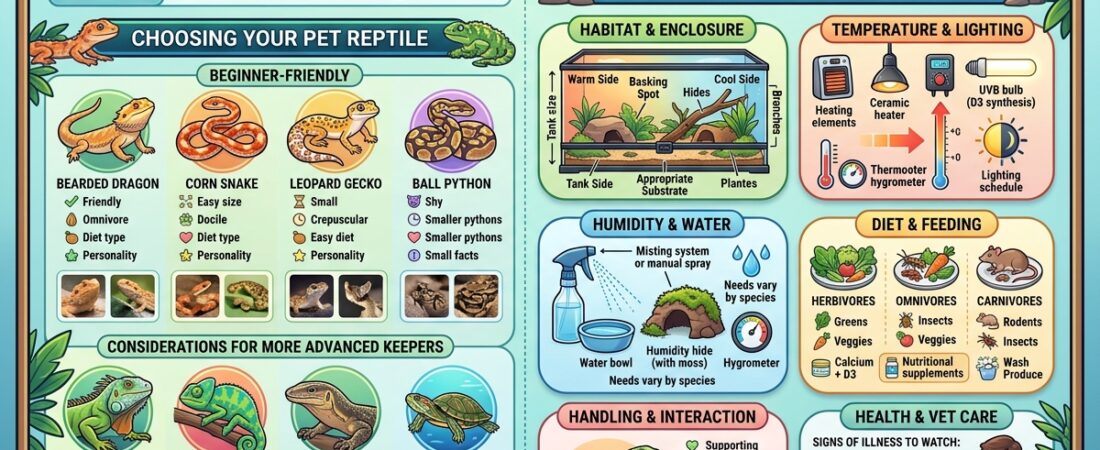
Pet reptiles have become increasingly popular among animal lovers who want to experience something different from traditional pets. Snakes, lizards, turtles, and tortoises can be fascinating animals to observe and care for. They have unique behaviors, interesting appearances, and specific environmental needs that make reptile keeping a rewarding experience.
However, owning a reptile is a serious responsibility. Reptiles may appear easier to care for than dogs or cats, but they require appropriate housing, temperature, lighting, humidity, nutrition, and regular observation. Choosing the right species and understanding its needs before bringing it home is essential.
What Are Pet Reptiles?
Pet reptiles are reptile species that can be legally and responsibly kept in captivity. Common examples include certain snakes, geckos, lizards, turtles, and tortoises.
Unlike many mammals, reptiles do not usually require constant interaction or attention. Their care focuses heavily on creating an environment that meets their biological needs.
Every species is different. A desert-dwelling lizard may need a warm and relatively dry enclosure, while a tropical reptile may require higher humidity. Some reptiles are active during the day, while others are mainly active at night.
Understanding these differences is the first step toward responsible reptile ownership.
Popular Pet Reptiles
There are many reptile species kept as pets, but some are more commonly chosen because their care requirements can be manageable when properly understood.
1. Bearded Dragons
Bearded dragons are among the most popular pet lizards. They are generally active during the daytime and are known for their distinctive appearance and calm behavior.
They need a spacious enclosure, suitable heating, ultraviolet lighting, hiding areas, and a balanced diet. Their food can include appropriately sized insects and plant matter, depending on their age and nutritional requirements.
Because they can become relatively large compared with some other pet lizards, owners should prepare an enclosure that provides enough room for movement and normal behavior.
2. Leopard Geckos
Leopard geckos are small lizards known for their spotted patterns and relatively manageable size.
They are primarily active around dusk and nighttime. Their diet commonly includes appropriately sized insects.
A suitable enclosure should provide warm and cooler areas, hiding places, appropriate substrate, and access to fresh water.
Leopard geckos are often appreciated for their distinctive appearance and interesting behaviors.
3. Corn Snakes
Corn snakes are popular among snake keepers. They are generally slender, active snakes with attractive patterns and a variety of color variations.
They are non-venomous and primarily eat appropriately sized prey.
A secure enclosure is essential because snakes are excellent escape artists. Their habitat should provide appropriate temperature gradients, hiding places, and enough space for the snake to move comfortably.
4. Ball Pythons
Ball pythons are another popular pet snake. They are named for their tendency to curl into a tight ball when they feel threatened or stressed.
They require an enclosure with appropriate temperature and humidity levels, secure hiding spaces, and suitable furnishings.
Ball pythons can live for many years, so prospective owners should understand that keeping one is a long-term commitment.
5. Tortoises
Several tortoise species are kept as pets. Their slow movement and long lifespans make them appealing to many reptile enthusiasts.
However, tortoises should not be considered low-maintenance pets. They can require considerable space, specialized lighting, appropriate temperatures, and carefully planned diets.
Some species can live for decades, meaning ownership may become a long-term responsibility.
6. Aquatic Turtles
Some freshwater turtles are kept as pets. They require suitable aquatic environments, clean water, basking areas, appropriate lighting, and proper nutrition.
Their enclosure often needs more equipment and maintenance than a simple dry habitat because water quality is important for their health.
Potential owners should also consider how large the turtle will become before choosing an enclosure.
Choosing the Right Pet Reptile
The best reptile for one person may not be suitable for another. Before choosing a species, consider its adult size, lifespan, diet, enclosure requirements, behavior, and veterinary needs.
Ask yourself whether you have enough space for the animal throughout its entire life. A small juvenile reptile may eventually become much larger.
It is also important to research local laws and regulations. Some reptile species may require permits or may be restricted in certain locations.
A responsible owner should understand the animal’s needs before purchasing or adopting it.
Creating a Suitable Reptile Habitat
A reptile’s enclosure should imitate important features of its natural environment.
Depending on the species, this may include:
- Appropriate temperature
- Proper humidity
- UVB lighting
- Basking areas
- Hiding places
- Suitable substrate
- Clean water
- Safe climbing structures
- Appropriate ventilation
Reptiles are ectothermic, so temperature management is particularly important.
Many species need a temperature gradient, meaning one area of the enclosure is warmer while another is cooler. This allows the reptile to move between areas and regulate its body temperature naturally.
Heating and Lighting
Heating and lighting are essential parts of reptile care.
Many reptiles require a specific temperature range to digest food and maintain normal activity. Heat lamps, ceramic heating devices, or other suitable equipment may be used depending on the species.
Some reptiles also require UVB lighting. UVB exposure helps certain reptiles produce vitamin D3, which is important for calcium metabolism and healthy bones.
Lighting schedules should also provide an appropriate day-and-night cycle.
Because incorrect temperatures can cause serious problems, owners should use reliable thermometers and follow species-specific care recommendations.
Feeding Pet Reptiles
Reptile diets vary widely.
Some reptiles are primarily insectivores, while others eat plants, fruits, meat, fish, or a combination of foods.
Bearded dragons, for example, require a balanced diet that changes as they grow. Leopard geckos primarily eat suitable insects. Many snakes consume appropriately sized whole prey.
Tortoises generally depend heavily on plant-based diets, while aquatic turtles may have more varied nutritional requirements.
Food should always be appropriate for the species and size of the reptile. Overfeeding can also create health problems, so owners should follow reliable feeding guidelines.
Fresh, clean water should also be available when appropriate for the species.
Handling Pet Reptiles
Handling a reptile should be done carefully and calmly. Not every reptile enjoys frequent handling, and some may become stressed when picked up.
Allow a newly acquired reptile time to adjust to its surroundings before attempting extensive handling.
When handling a reptile, support its body properly and avoid sudden movements. Never grab a snake by the tail or restrain a reptile unnecessarily.
Children should only handle reptiles under appropriate adult supervision.
Understanding the animal’s body language can help owners recognize signs of stress or discomfort.
Cleaning and Hygiene
Cleanliness is an important part of reptile care. Waste should be removed regularly, and the enclosure should be cleaned according to the needs of the species.
Water bowls should be kept clean, and substrate should be replaced or maintained when necessary.
Reptiles can carry microorganisms such as Salmonella, even when they appear healthy. Good hygiene is therefore essential.
Wash your hands thoroughly with soap and water after handling a reptile, its food, equipment, waste, or enclosure.
Young children, older adults, and people with weakened immune systems may need additional precautions around reptiles.
Reptile Health
Regular observation can help owners notice potential health problems early.
Changes in appetite, activity, breathing, movement, skin condition, or waste may indicate that something is wrong.
Common problems can include nutritional deficiencies, parasites, respiratory issues, injuries, and inappropriate temperature or humidity.
Reptiles can hide signs of illness, so owners should pay attention to subtle behavioral changes.
A veterinarian experienced in reptile medicine should be consulted when health concerns arise.
How Long Do Pet Reptiles Live?
Many reptiles have surprisingly long lifespans.
Some small lizards may live for several years, while certain snakes, turtles, and tortoises can live for decades with appropriate care.
This means purchasing a reptile should never be an impulsive decision. The owner needs to consider the animal’s long-term housing, feeding, veterinary care, and financial requirements.
A pet reptile can become a long-term commitment rather than a short-term hobby.
Benefits of Keeping Reptiles as Pets
Reptiles can be interesting companion animals for people who enjoy observing natural behaviors and learning about wildlife.
They can also provide opportunities to learn about biology, animal behavior, habitats, and conservation.
Many reptiles do not require the same type of daily interaction as dogs, although they still need consistent care.
Their quiet nature and fascinating behaviors make them appealing to many experienced animal keepers.
However, these advantages should not be confused with being “easy” pets. Proper reptile care requires knowledge, preparation, and consistency.
Responsible Reptile Ownership
Responsible ownership means putting the animal’s welfare first.
Owners should obtain reptiles through legal and ethical sources and avoid supporting illegal wildlife collection or trafficking.
Before bringing a reptile home, research its adult size, habitat, diet, lifespan, legal status, and veterinary requirements.
Never release a captive reptile into the wild. A pet reptile may not survive, and releasing non-native species can potentially harm local ecosystems.
If an owner can no longer care for a reptile, they should contact an appropriate rescue organization, experienced keeper, or qualified professional rather than abandoning the animal.
Conclusion
Pet reptiles can be fascinating and rewarding animals to keep, but they require specialized care and long-term commitment. Popular choices include bearded dragons, leopard geckos, corn snakes, ball pythons, tortoises, and aquatic turtles, with each species having different requirements.
Successful reptile ownership depends on providing the right habitat, temperature, lighting, humidity, nutrition, hygiene, and veterinary care. Understanding the natural behavior and environmental needs of a reptile before bringing it home is one of the most important steps an owner can take.
With proper preparation and responsible care, pet reptiles can thrive in captivity and give their owners an opportunity to observe some of nature’s most unique animals up close.